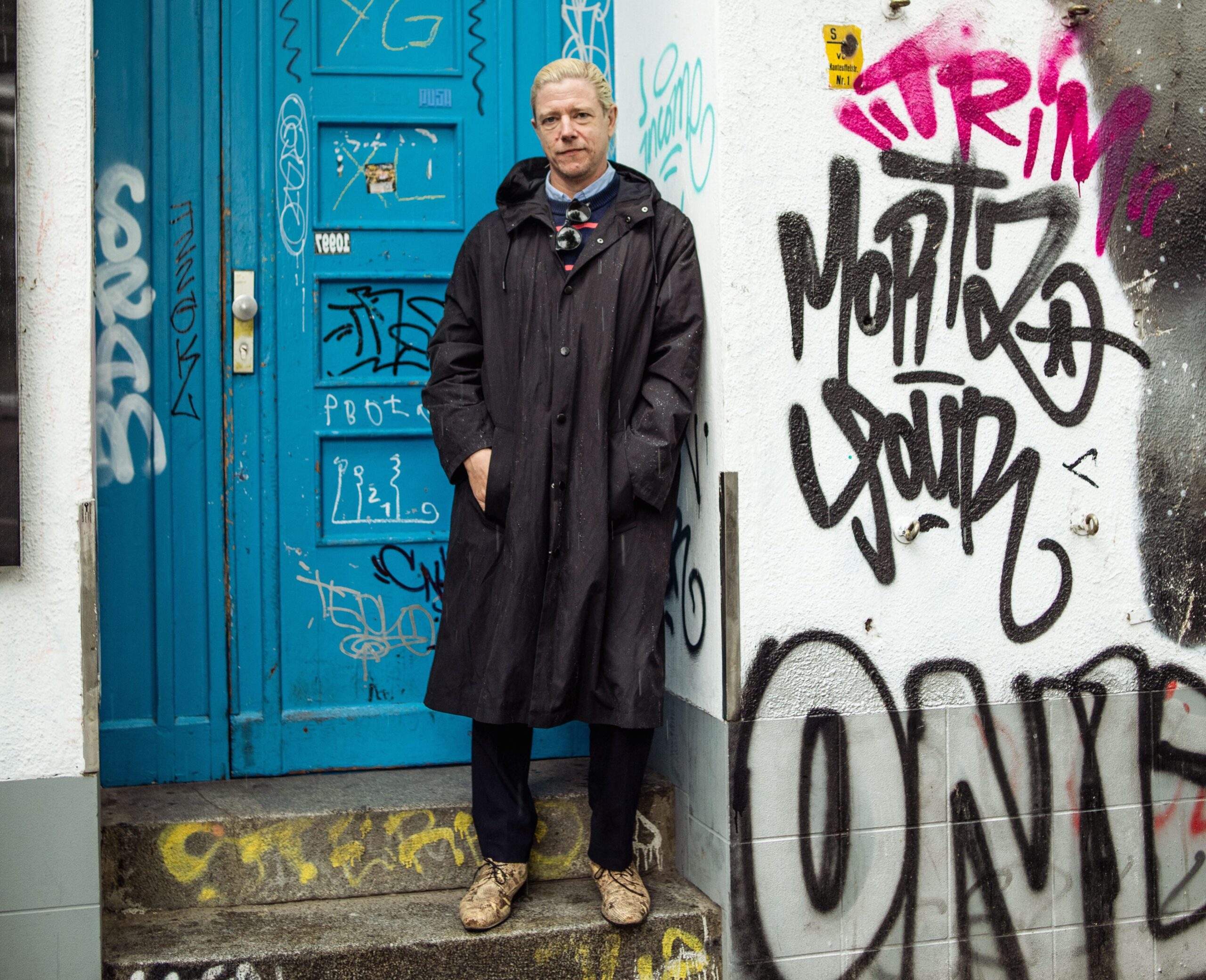
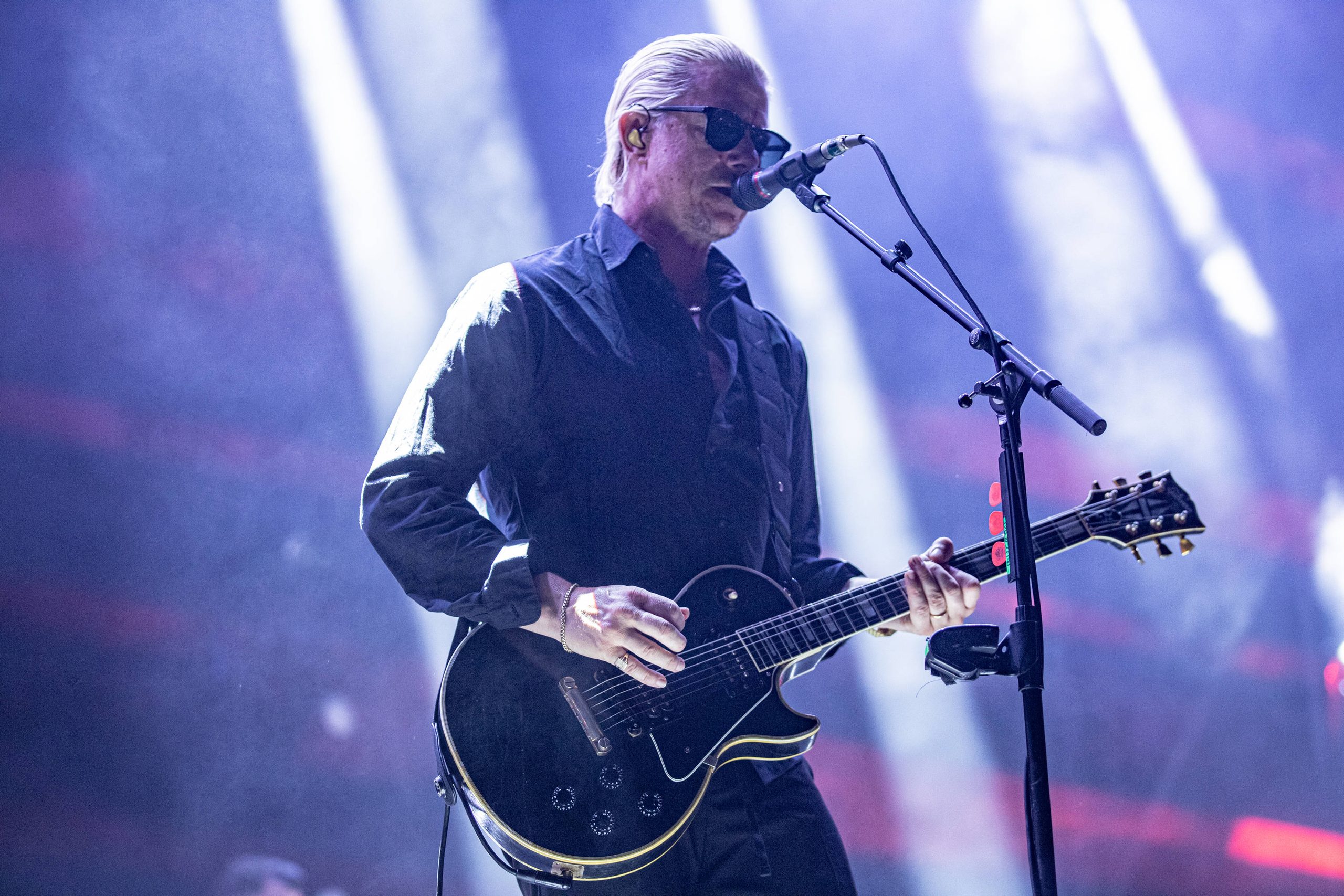
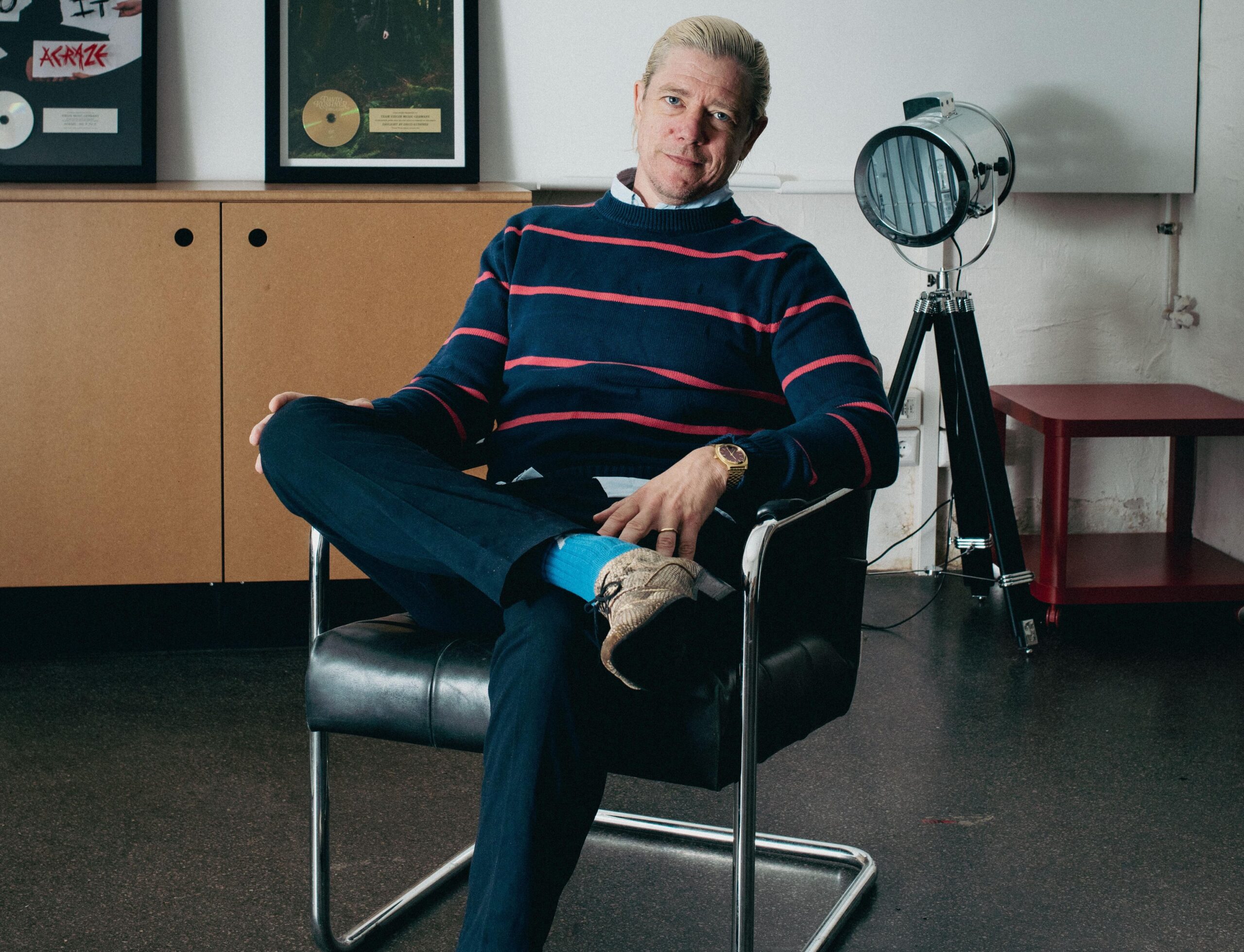
For over two decades, Interpol has been synonymous with New York City and the turn-of-the-century indie post-punk revival. Catapulted into the global spotlight by their landmark debut, Turn On the Bright Lights, the band’s sharp-suited aesthetic and minimalist rock sound became woven into the fabric of the East Village. So during the rollout of their latest album, This Mirror Weighs a Ton, it came as a surprise that frontman Paul Banks had traded the skyscrapers of Manhattan for the brutalist charm of Berlin. Ahead of their headline show at the Uber Eats Music Hall, we sat down with Banks to talk about his new life in Germany and its influence on the band’s newest record.
How did you end up moving to Berlin?
My wife is German and during the pandemic she was studying for a master’s in Edinburgh, Scotland. I flew over to visit her on the day the travel ban was implemented. I have a UK passport, so instead of going home, I just wound up staying with her in Edinburgh for, like, six or seven months. And then when she finished, she wanted to look for work and felt Berlin was where she wanted to go, and I’ve always liked Berlin, so I just basically followed her here, and yeah, that’s where I’ve been.
How has that been after so many years?
I speak Spanish and pretty good French, but my German is fucking terrible. It’s definitely not something that I’m picking up by osmosis. The most I learn is from my boxing coach, who is from Uzbekistan, and his German is in itself pretty flawed, but that’s literally because he speaks no fucking English. In the context of boxing, you know generally what someone’s going to be talking about.
I think being in a biking town has also factored into my writing in that way. It’s part of my method.
I think there’s this sort of bluntness verging on rudeness, which is just funny. It’s not that people are any less warm; it’s that in that first social interaction, they just don’t give you all the fucking hoopla. If you’re American, you realise, in contrast, everyone’s super very friendly and talkative with total strangers. Once you’ve been somewhere long enough, you realise like, ‘Oh, everybody’s as warm as anywhere else in the world’. The biggest culture shock is literally supermarket checkouts. That will fuck up everybody when they first get here.
I see you have a passion for photography. What have you been shooting?
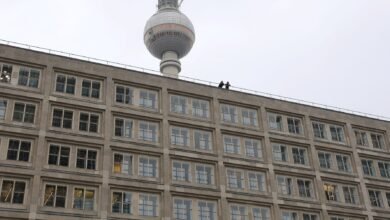
I’m really into brutalist architecture. There are a couple of buildings I’ve shot here, like the Bierpinsel and the Bayer Building. There’s this one right by the highway, the ICC. My wife wants me to read up on brutalism, but I feel like there are these little details to the style that I found across all these buildings that I’ve photographed, and I don’t know whether or not they’re explicitly defined as brutalism. For me, brutalism seems to have attempted to be imposing and not inviting, which I think is such a fucking hilarious thing to be doing.
How have you found the music scene here?
I’m often affected by the space I’m in and the buildings around.
I’ve been having kids, so I don’t go to concerts too much. I started a band in Berlin, which we would call Berlin Project, if that were possible. I’ve been working on that a lot, and it’s been a big part of my music journey in Berlin, and hopefully there’ll be a record out next year. We don’t have a label yet, but that’s been three years in the making. It’s with a friend of mine, Raife Burchell from London, who I met boxing and is often in Berlin, and with Aaron from Liars. Aaron lives in Berlin, and I’ve known him since Liars toured with Interpol in 2004. That fucking dude is one of the coolest guys I’ve ever seen with a guitar, and he’s just a wonderful person. He’s actually helped me in some ways with how to live here and showed me some of the ropes of getting health insurance and stuff like that.
How has it been creating this new Interpol album then, with the distances involved?
That was an issue with our previous record, The Other Side of Make Believe. I wrote a lot of that in Edinburgh, so distance was really a factor there. With this record, I didn’t want that distance again. We really needed to write in a room together. So we went to New York, met up in Manhattan and had writing sessions there. I then came back to Berlin and wrote the majority of the lyrics here. Then we did the vocal sessions here in Berlin at JRS Studios, which is a fucking awesome space. I love that place.
Has there been something about the city that influenced the new record?
That’s hard to say. I’m often affected by the space I’m in and the buildings around. The space I use to write is on Invaliden[straße], and I live in Schöneberg. I like to cycle there and back. It’s about 25 minutes each way. I often use this time as part of my writing process, listening to what I’m working on on the way. I find that when I’m riding, a lot of musical ideas come to me. And so I think being in a biking town has also factored into my writing in that way. It’s part of my method.
That doesn’t sound amazingly safe.
They’re in-ear headphones, but with transparency.
You recently celebrated the 20th anniversary of Antics by playing the album in full in Berlin. Did going back and revisiting that material help in writing this album at all?
You know, we didn’t have a lot of keyboards on the previous two records. That was because I didn’t want things added as an afterthought. If we don’t have a keyboard player writing the songs with us in the room, then I don’t want it added later. I’m gonna let Daniel’s [Kessler, guitarist] stuff not be crowded out because I like Daniel’s writing… I feel like his riffs could be embedded or foregrounded.
When we had Carlos [Dengler, former synth and bass player], he just did it, and so I think I came around or just entered into a different phase where I actually like synths with our sound. I think it gives a nice depth to the soundscape, so that maybe affected how much more welcoming I was to the idea of having Andrew Wyatt contribute lots of different synths to the record.
The new record also feels louder and heavier. How did that happen?
On the last record, from a singing standpoint, I had to sing and write ideas into my laptop in a quiet apartment. In contrast, on this record, I was back to being in the same room as Sam [Fogarino, drummer], being loud and able to project my voice, giving different levels of energy. That’s how things have historically been with us. For almost all of our records, I would just hole myself up in a studio and let the engineers leave and I would just record my own vocals, but on this record, we worked with producer Andrew Wyatt, and he actually helped me from a vocal coach standpoint. He got to channel a different vocal approach, and people seem to like the vocal tone on this record.
I also gave the bass duties to Brad, our touring bass player, so he wrote the bass lines and was able to be in the room with us writing, which allowed me to focus on my guitar parts. Then having Andrew Wyatt kind of filled this role of keyboard player. And due to fatherhood, I just feel more… there was something with the last record… I don’t know if I can pinpoint what I’m dissatisfied with. There’s a lot of things that we did differently on purpose with this record. I think that all translates to having a real purposefulness and a weight to it in the sense of it being laboured over. Strategies of how to best capitalise on our creativity were implemented. It was an album made with intention.
This Mirror Weighs a Ton is available on Partisan Records. Follow Paul Banks at @bankspaulbanks and Interpol at @interpol.